Urdu Poetry
Ghalib, Iqbal, Mir, Faiz and the poets who came after them: famous couplets read slowly, with plain-English meanings and the stories behind them.
 Urdu Poetry
 Wall Art: How to Choose a Print You'll Keep
24 October 2026, 3 min read
Choose Urdu poetry wall art by reading the couplet first, checking that you understand its meaning, and then matching its script, scale and frame to the place where it will hang. A print works best when the words matter to you and remain readable in everyday use.
 Urdu Poetry
Three Ghalib Couplets: Meanings and Ideas for Your Wall
24 October 2026, 3 min read
Ghalib's poetry often holds two feelings together: desire and disappointment, humour and vulnerability, remembrance and absence. These three couplets offer different ways into his work, and different moods for a poetry print.
 Urdu Poetry
Iqbal Poetry Meanings: Khudi Ko Kar Buland and Sitaron Se Aage
24 October 2026, 3 min read
Khudi Ko Kar Buland asks the reader to develop a self of such strength that destiny itself becomes a conversation. Sitaron Se Aage imagines horizons beyond the ones already visible. Together, they offer a richer starting point for reading Iqbal than a simple instruction to work harder.
Keep the words close
Urdu poetry prints in A4 and A3, framed or not, delivered across India.
- BestsellerFestive offer
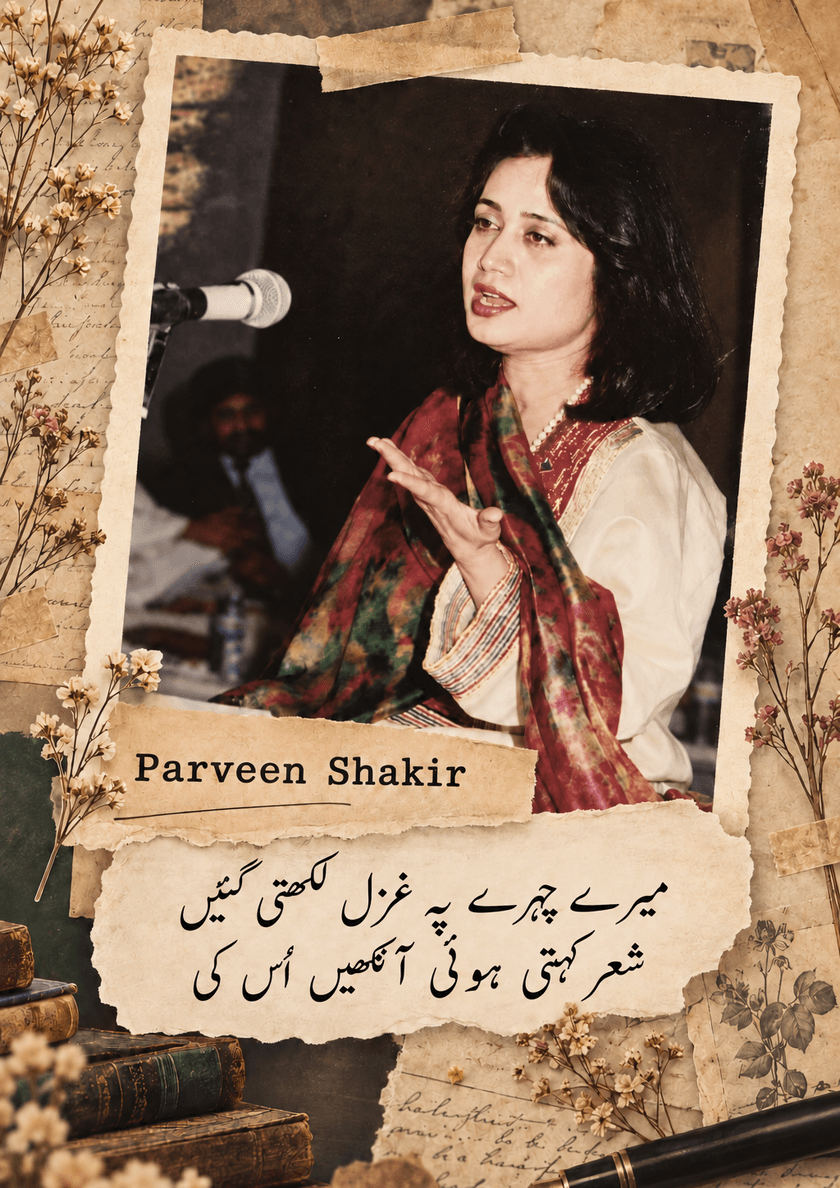
Mere Chehre Pe Ghazal
Parveen Shakir, love
Memory Album design
- from ₹799
was ₹1,199 - Framed
- from ₹1,299
was ₹1,799
- BestsellerFestive offer
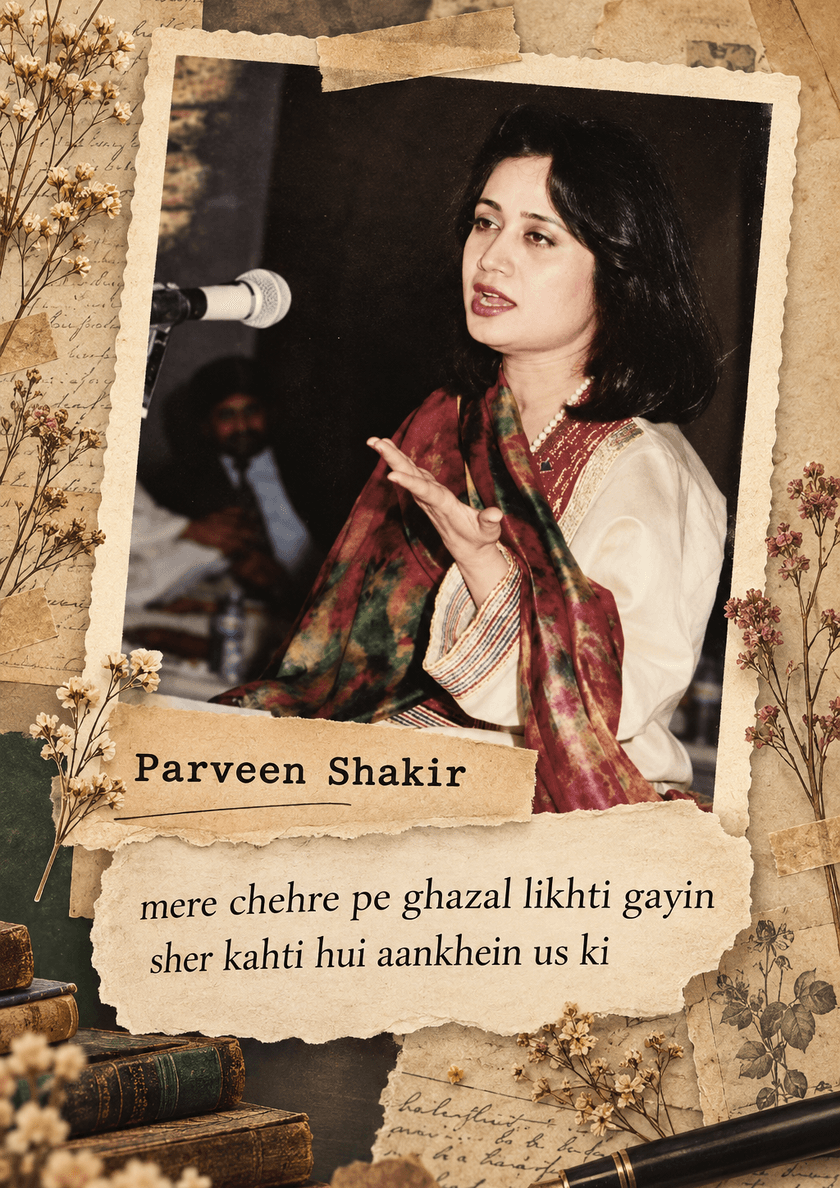
Mere Chehre Pe Ghazal, Roman Urdu
Parveen Shakir, love
Memory Album design
- from ₹799
was ₹1,199 - Framed
- from ₹1,299
was ₹1,799
- Festive offer
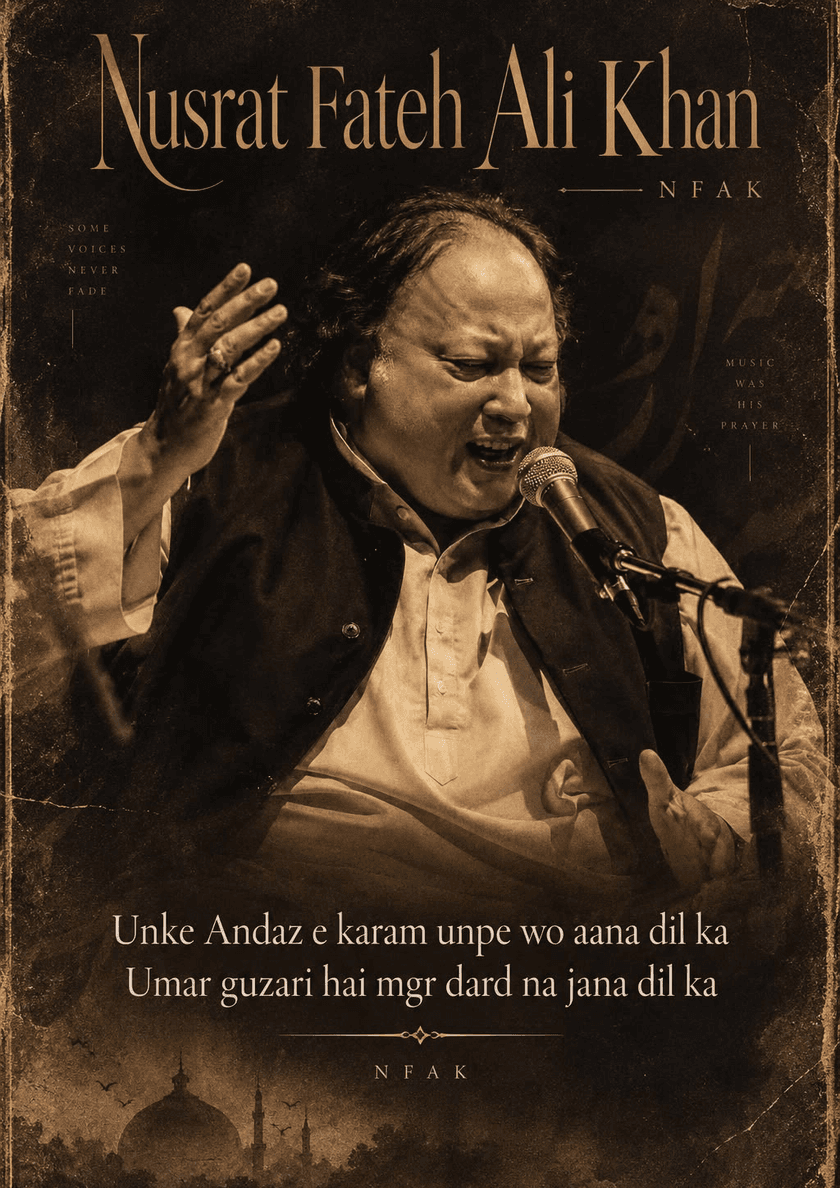
Andaz-e-Karam
Nusrat Fateh Ali Khan, love
Nocturne Portrait design
- from ₹799
was ₹1,199 - Framed
- from ₹1,299
was ₹1,799
- Festive offer
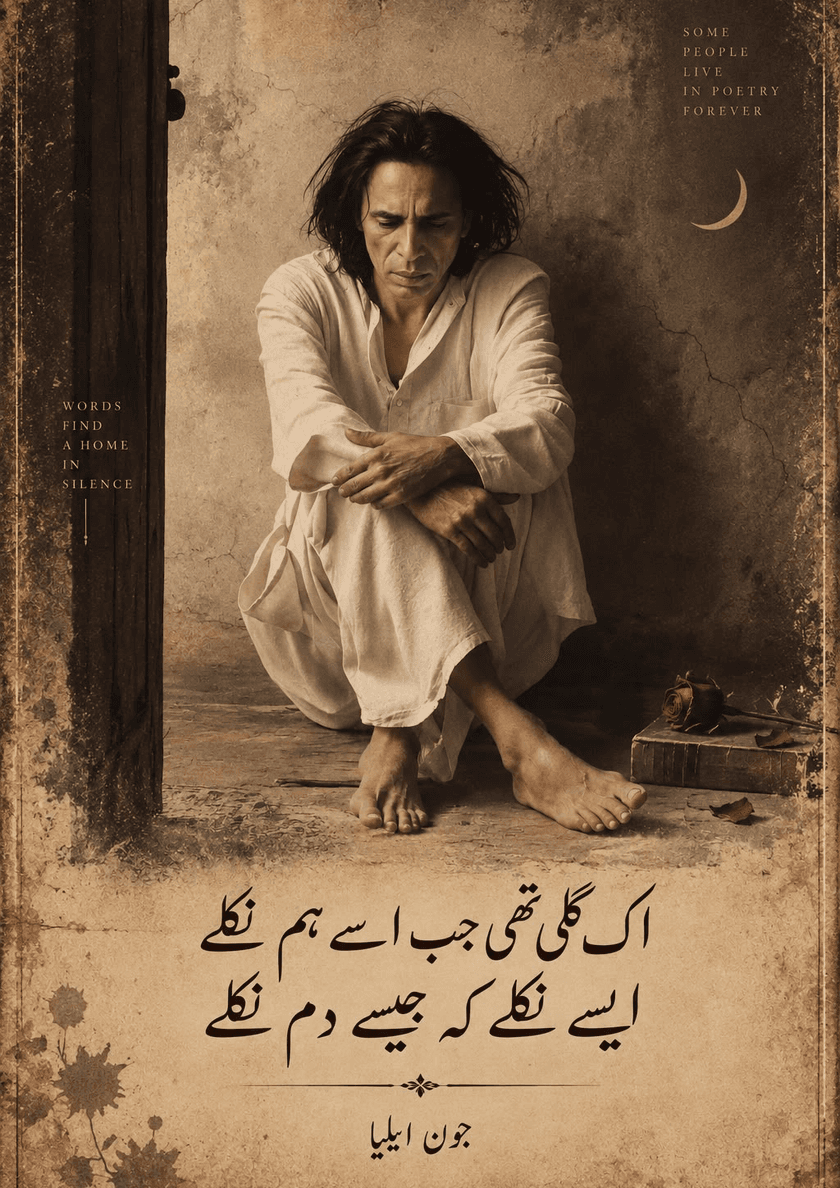
Ik Gali Thi
Jaun Elia, separation
Sepia Portrait design
- from ₹799
was ₹1,199 - Framed
- from ₹1,299
was ₹1,799
More from the Journal
 Cinema & Music
Films That Feel Like Poetry: Seven Hindi Films We Keep Writing Down
3 November 2026, 5 min read
Some films you watch once and forget. Others you quote for years. You send their dialogues to friends at 2 am, put their songs on every long drive and find yourself writing their lines in the margins of notebooks.
 Journaling & Writing
How to Start a Journal You'll Actually Keep, with 30 Prompts for Plain Pages
3 November 2026, 5 min read
Most journals die in the second week. The first few entries are long and hopeful, then a busy day turns into a busy week, and the diary moves to a drawer. It is not a lack of discipline. Usually the journal was asked to be too much: a planner, a gratitude log, a work notebook and a place for feelings, all at once.
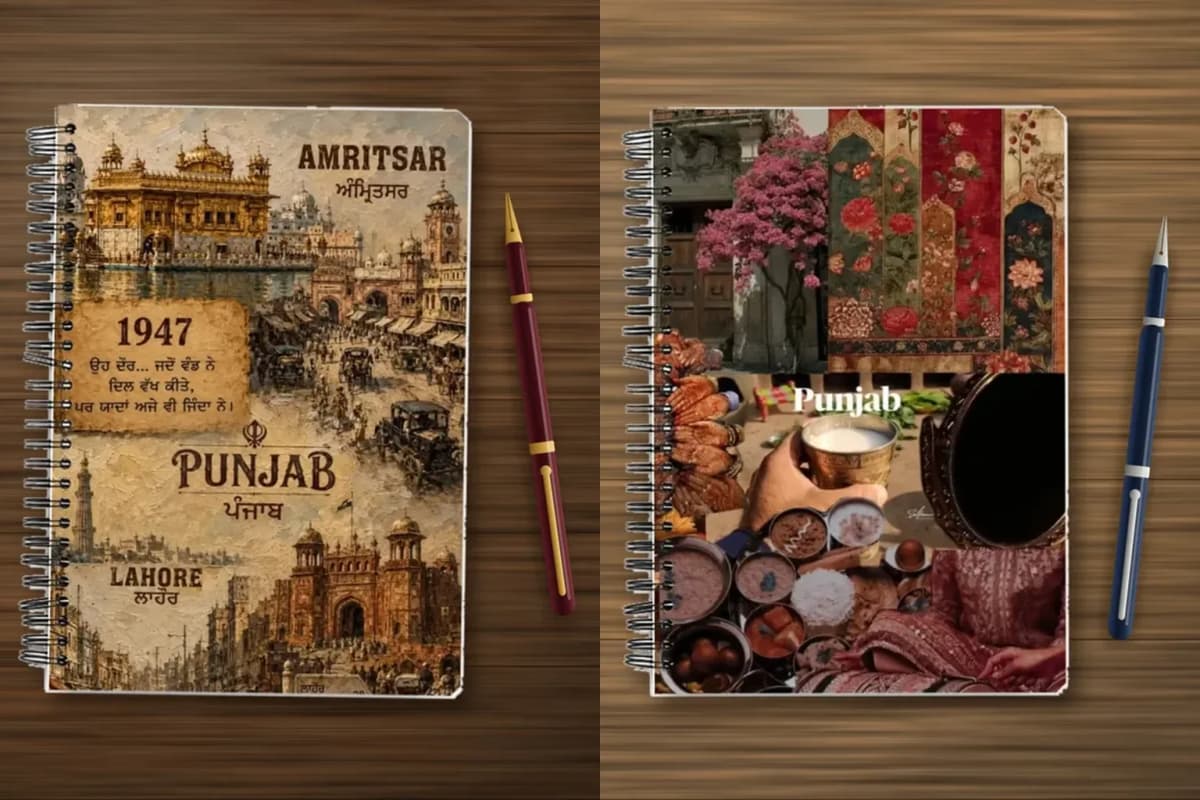 Punjabi Poetry
 for Beginners: Five Poets to Start With
3 November 2026, 5 min read
Punjabi poetry is older than the border that now runs through Punjab, and it still belongs to both sides of it. It was sung at shrines and weddings long before it was printed, which is why so much of it reaches people first as a song: a qawwali heard in childhood, a folk singer on the radio, a line a grandparent half-remembers.